Self-Mastery by Van K. Tharp, Ph.D.
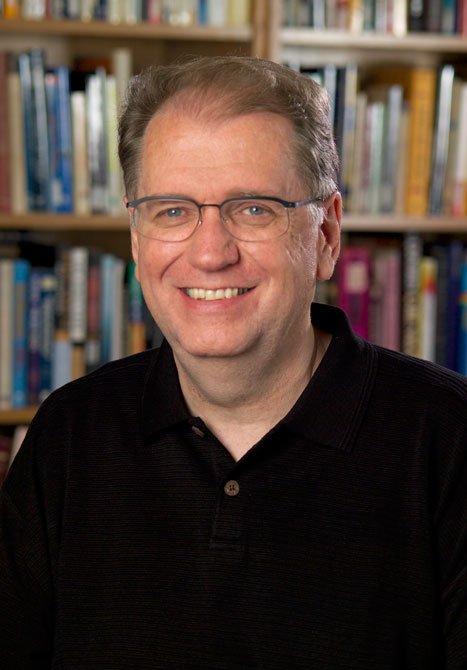 A note to readers: While Dr. Tharp’s content is timeless, this article is from our newsletter archive and may contain outdated information, missing links or images.
When I was in 4th grade, my parents applied for me to attend a famous school in Switzerland but I was rejected because of my grades. In hindsight, I’m glad I was rejected because it changed everything for me. Suddenly grades were important. My best friend in school, Mike Stewart, had an IQ of about 160 and he always got straight A’s. Mike became my first role model. “How did he do it?” became my primary focus.
I began to learn what he did and copy it. And at first it seemed like a lot of work, but I remember when I got straight A’s in high school thinking, “This isn’t really too hard. I don’t know why everyone can’t do it.”
Part of what I learned about getting good grades was to really get excited about what I was learning. If that was difficult overall, I could find some part of the material I was learning that really excited me. I remember my first application of this really clearly because we lived in England and one year, I was in a geography class. My Mom and I took a trip to Bath (where the old Roman baths were located) and to Stonehenge which made geography and those places come alive for me. I wrote up a report about the trip which was full of pictures and I’m sure my excitement about it spilled over into the report. That was the first A that I can remember earning. And I was like, “Wow, get interested and excited about something and then it’s easy.”
That’s a very simple example of gaining mastery, the topic I chose to write about today. Another current example of mastery, self-mastery is the first part of the Super Trader program (ST1). I’ve put together 21 lessons that take about 1200 hours (average ST data) to complete to meet my criteria for passing. I’ve noticed, however, that some people do a lot more work than just for passing; others do just enough to get by; while others run into obstacles, dance with the obstacles, and just don’t get very far.
Think of a time in your life when you really mastered something – some skill, some knowledge, perhaps your profession, perhaps some time at school when you really mastered some area – and remember what that was like? How did you know you mastered it? And if you made a decision to master something, what were the criteria that had to be met before you knew you had mastered it?
In one of the Peak 204 exercises — the Modeling and Mental Strategies Workshop coming up in August — I ask everyone to detail their criteria for how they know they’ve done a good job. For some of my Super Traders, that’s probably when I tell them they’ve passed the lesson. But others have internally generated criteria beyond just “passing” and those are the few (depending on the nature of their criteria) who can really achieve mastery.
I believe it’s important for me to know my own criteria for mastery before I can expect my students to achieve it so I look for personal examples. As a college undergraduate, my goal was to get an A in each class. That didn’t demonstrate mastery necessarily but I can see my criteria for mastery in this formula. To get an A in a college class I had the following strategy:
- I would figure out what the professor/teacher wanted as a minimal requirement.
- I would also figure out what he/she considered excellent – which was usually obvious if you paid attention. Excellent usually meant doing things that the other students didn’t do (for example the way some of my Super Traders go all out and way beyond what is required for their ST lessons).
- And when I understood points 1 and 2, then I’d do 2.
Now here is where it gets interesting. If something really interested me, then I’d want more than just an A, I’d want mastery in the subject. To me, mastery meant:
- That I’d really “get it.”
- That I took it to another level.
- That I understood it at a different level than anyone else and,
- That I’d get to the point where I could actually teach it.
These criteria have stuck with me in creating The Van Tharp Institute. For example, I have some new models which I think could dramatically improve my modeling work and my ability to help others. Even though I’m in my late 60s now, these new models I’ve discovered have me feeling like a kid again and I’m really excited about it and highly motivated to get everything in place. For example, some of this new material will be introduced to the Super Traders in Peak 204 next month and more will come out at the Super Trader Summit in December.
A key to self-mastery is understanding that it is all within you – your whole reality is within you. Furthermore, when you are excited about something, there is a key detail in your representation of the world that lets you know you have it. NLP calls these details submodalities and Neurosemantics calls them metamodalities. So what is my key submodality for letting me know that I have it? It’s the feeling of excitement. There is a feeling in my throat of wanting to tell the world, a tingling that wants expression. In addition, my whole body feels light. I want to just start dancing and laughing.
So if you really get what I’m talking about, it will change your life. If you want to master trading, then you must master yourself. And when you master yourself, you become happier, lighter, you laugh more, and you can get an incredible amount done. Mastering anything else merely flows from the intention to do it.
Just answering these questions can make a dramatic difference in your life:
1. What are your criteria for knowing you have done a good job? What would you have to add to that to produce mastery of something? How do you know when you have mastery?
2. If you have mastery, especially mastery of yourself, what would it mean to you/about you? What does it mean to be a master at something? What would it mean to be a master of yourself?
3. What would self-mastery tell you about your skills and resources?
4. What would self-mastery tell you about the worlds you wish to enter?
5. What would self-mastery mean in terms of your relationship to others?
6. What would self-mastery mean in terms of time?
7. How would self-mastery change your relationship with God? (or if you don’t believe in God, then whatever you believe about the universe)
8. How would self-mastery empower your Intention for meeting your goals and your purpose in life?
9. What state would be required for all of this to happen?
10. If you mastered yourself, what would happen with your trading?
Please write out the answers to those questions like someone who wants wants self-mastery and must get those questions answered to know how to get it. And once you have done that and read over your list, think about how self-mastery would impact your trading. What are the next steps for you to make this happen?